

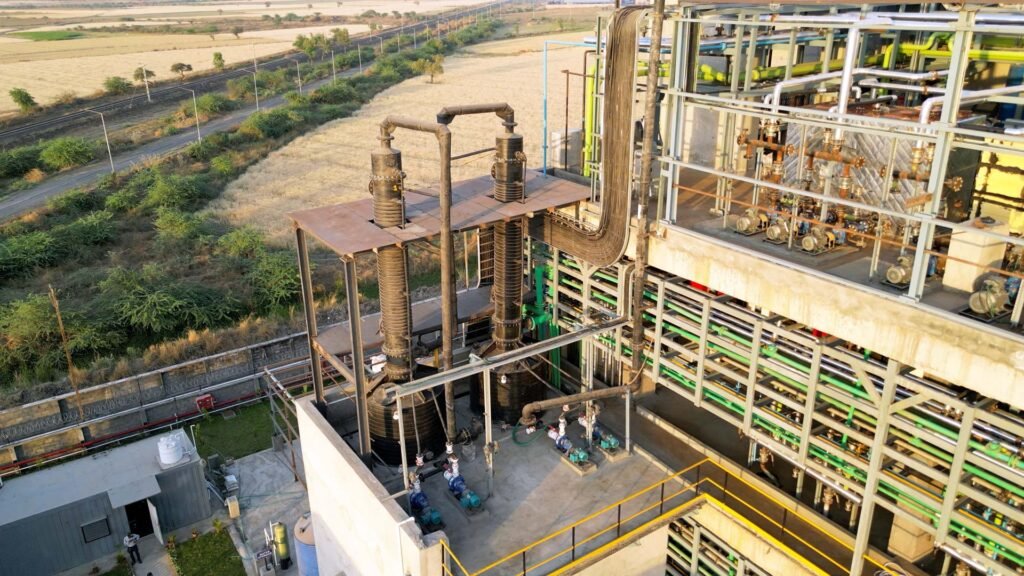
Quality systems and commercial terms receive close attention when companies select an outsourced manufacturing site. Environment, health and safety controls deserve the same scrutiny. An EHS audit of a chemical manufacturing partner helps determine whether the facility can run the proposed chemistry safely and sustain the campaign as volumes increase.
Certificates provide useful context, but an effective audit follows the process through the actual equipment, utilities, storage areas, treatment systems and operating records.
1. Effluent capacity and waste routing
Start with the expected waste profile of the process. Review aqueous load, solvent-bearing streams, salts, pH, COD and any chemistry-specific contaminants. Compare the site’s treatment capacity with its present operating load and the additional demand from the proposed campaign.
Ask how streams are segregated, sampled, transferred and documented. Confirm the route for material that cannot be treated on site and examine how abnormal discharges are contained.
2. Process-hazard review
A HAZOP or equivalent risk assessment should address the transferred process as it will run in the selected vessel—not only the product name. The review should consider addition sequence, credible deviations, cooling or agitation failure, gas generation, pressure, static risk, incompatible materials and emergency response.
Verify that recommendations are assigned, tracked and closed before the first plant batch. Changes made during scale-up should pass through documented change control.
3. Solvent and hazardous-material storage
Inspect tank farms, drum-storage areas, transfer systems, earthing, labelling, segregation and spill containment. For bulk flammable storage in India, confirm the facility’s applicable PESO approvals and operating controls. Capacity should be assessed against the proposed campaign, including recovered-solvent receivers and waste holding.
4. Fire protection and emergency readiness
Portable extinguishers are only one layer of protection. Review hydrant coverage, fire-water availability, foam systems where applicable, detection and alarm systems, access routes, emergency isolation, spill response, drills and coordination with external responders.
Ask operators how they would respond to a realistic scenario from the proposed process. Their answers often reveal whether procedures are understood in practice.
5. Safety performance and corrective action
Review recent incidents, near misses, occupational exposures and process-safety events. A zero figure without supporting records is less useful than evidence of active reporting, investigation and corrective action. Examine whether CAPA actions are completed on time and whether lessons are shared across shifts and departments.
Evidence worth requesting
- Applicable licences, consents and inspection records
- Process-risk assessments and action-closure records
- Waste manifests and treatment-performance trends
- Preventive-maintenance and safety-critical inspection records
- Training, drill and incident-investigation records
- Management-of-change and contractor-control procedures
Suntrox Finechem welcomes customer EHS reviews at its Dahej facility. Learn about our EHS and sustainability systems, review our manufacturing infrastructure, or arrange a project discussion.